
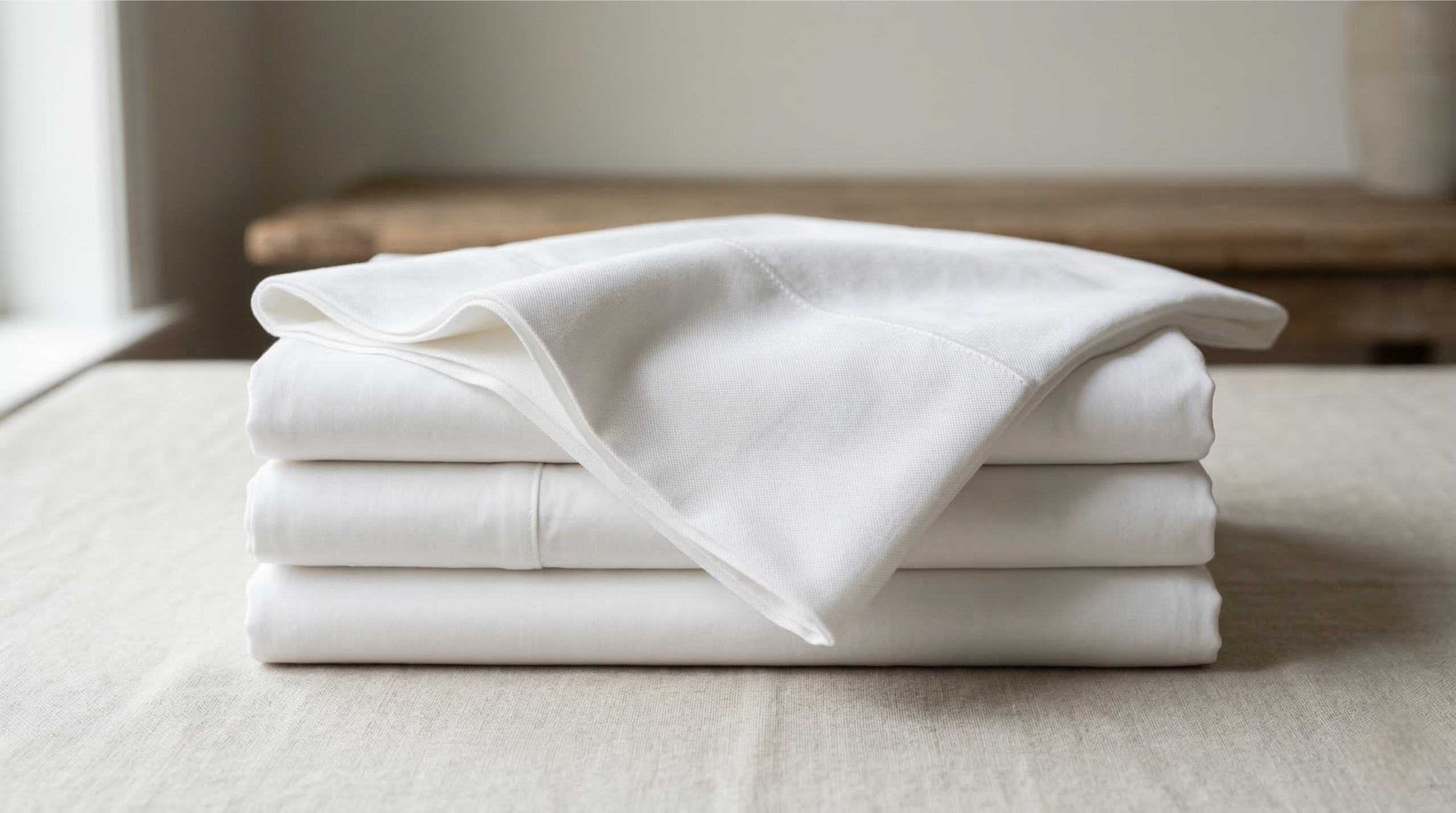
Bedsheets are often sold using buzzwords like “luxury,” “hotel quality,” or “1000 thread count.” But most shoppers don’t actually know what those terms mean — or which ones matter for real-world comfort.
In this guide, we break down bedsheet materials, fabric weaves, and thread count in simple terms. No marketing hype, no brand bias — just practical information to help you choose sheets that actually feel good and last longer.
What Are Bedsheets Really Made Of? (Common Materials Explained)
At the most basic level, bedsheets are defined by the fiber they’re made from.
This matters far more than thread count or brand name, because fiber directly affects breathability, softness, durability, moisture control, and how sheets age over time.
Most bedsheets today are made from cotton, polyester, or blends of the two, while newer alternatives like bamboo-derived viscose and microfiber have become increasingly popular. Each material behaves very differently in real-world use, which is why understanding fiber type is the first step to choosing the right bedsheets.
Common Bedsheet Materials Explained
Cotton is the most common bedsheet material and remains the benchmark for comfort and breathability. However, quality varies widely. Long-staple cotton generally feels smoother, resists pilling, and lasts longer, while short-staple cotton tends to feel rougher and break down faster over time. Cotton sheets balance softness, airflow, and durability better than most alternatives.
Bamboo-derived fabrics (usually labeled as bamboo viscose or bamboo rayon) are known for their smooth feel and moisture absorption. These sheets often sleep cooler than synthetic fabrics and feel soft against the skin. However, they are not made from raw bamboo fiber and typically require chemical processing. While comfortable, bamboo-derived sheets can be less durable and need gentler care to maintain their texture.
Microfiber (polyester-based sheets) are made from extremely fine synthetic fibers, usually polyester. The tightly woven structure gives microfiber sheets a soft feel at first touch and strong wrinkle resistance. The downside is breathability — microfiber traps heat and moisture, making it less suitable for hot sleepers. Over time, the fabric can also lose softness and develop static.
Polyester sheets use standard synthetic polyester fibers rather than ultra-fine microfiber. They are durable, inexpensive, and easy to maintain, but they offer poor airflow and limited temperature regulation. For comfort-focused sleepers, polyester alone is usually the least breathable option.
Cotton–polyester blends attempt to combine the softness of cotton with the wrinkle resistance and durability of polyester. While blends can be practical and affordable, they generally sacrifice breathability and don’t perform as well as high-quality, pure cotton sheets.
Bedsheet Materials at a Glance
| Material | Breathability | Softness (Initial Feel) | Durability | Best For |
| Cotton (Long-staple) | High | Medium–High | High | Most sleepers, everyday comfort |
| Bamboo-derived (Viscose/Rayon) | Medium–High | Very High | Medium | Hot sleepers who want softness |
| Microfiber (Polyester-based) | Low | High (initially) | Medium | Budget use, low maintenance |
| Polyester | Low | Low–Medium | High | Occasional use, durability over comfort |
| Cotton–Poly Blend | Medium | Medium | Medium–High | Wrinkle resistance with lower cost |
Bedsheet Weaves Explained (Why They Matter More Than You Think)
The weave refers to how individual threads are interlaced to form fabric.
While fiber determines what the sheet is made from, weave determines how it feels, breathes, and performs during sleep.
Two sheets made from the same material and thread count can feel completely different depending on the weave.
Percale Weave : Percale uses a simple one-over, one-under weave that creates a crisp, matte finish. It is highly breathable and works well for hot sleepers or warm climates.
Sateen Weave :Sateen uses a denser weave that gives sheets a smooth, silky feel with a slight sheen. It tends to sleep warmer and feels softer at first touch compared to percale.
Twill Weave :Twill has a diagonal weave pattern that makes the fabric stronger and more durable. It is less breathable and is more commonly used in duvet covers than everyday sheets.
Thread Count — What Actually Matters
Thread count refers to the number of threads woven into one square inch of fabric. While it’s often used as a headline feature, thread count alone is a poor indicator of bedsheet quality.
For most high-quality cotton sheets, a thread count between 200 and 400 is more than sufficient. Within this range, sheets can be breathable, durable, and comfortable — assuming the fiber quality and weave are good.
Problems begin when thread counts climb unusually high. To inflate numbers, manufacturers often use multi-ply threads, where thinner strands are twisted together and counted as multiple threads. This increases the thread count on paper but can reduce airflow, softness, and long-term durability.
Higher thread counts can also make sheets feel heavier and trap more heat, especially when combined with dense weaves or synthetic fibers. As a result, extremely high thread count sheets don’t necessarily feel better — and may feel worse for warm sleepers.
Instead of focusing on the highest number, it’s more useful to consider fiber quality, weave type, and realistic thread count ranges together. A well-made 300-thread-count cotton sheet will often outperform a poorly made 1000-thread-count alternative.
Marketing Claims vs Reality
Terms like “luxury,” “hotel quality,” and “premium” are widely used in bedsheet marketing, but they aren’t regulated and don’t have a consistent meaning. Different brands can use the same labels to describe very different products, making these claims unreliable on their own.
What actually determines comfort and longevity is fiber quality, weave type, and realistic construction choices. Sheets that feel soft on day one may not perform well after repeated washing if the underlying materials are poor.
Marketing language often emphasizes high thread counts or surface softness while ignoring factors like breathability, pilling resistance, and fabric aging. Understanding how sheets behave over time is far more useful than relying on how appealing they sound on the package.
How to Choose the Right Bedsheets for You
Choosing the right bedsheets depends more on how you sleep than on marketing labels or headline thread counts. A few practical considerations make the decision clearer:
- If you sleep hot, breathable materials like cotton with a percale weave tend to feel cooler and lighter.
- If you prefer a softer, smoother feel, sateen weaves or bamboo-derived fabrics may feel more comfortable, though they often sleep warmer.
- If low maintenance matters, wrinkle resistance and durability may be more important than maximum breathability.
These factors interact — material, weave, and realistic thread count work together to shape how sheets feel night after night. Rather than guessing, understanding these basics helps narrow choices quickly.
In the next article, we’ll walk through how to choose bedsheets step by step based on sleep style, climate, and personal comfort — turning these fundamentals into clear, practical recommendations.
Bringing It All Together
Understanding bedsheets starts with separating what actually affects sleep from what simply sounds appealing. Materials, weaves, and realistic thread count ranges play a far greater role in comfort and durability than marketing labels or inflated numbers.
By focusing on these fundamentals, you build a clear foundation for making better bedding decisions — ones based on performance, longevity, and real comfort, not noise.